Showing posts with label zen. Show all posts

Thursday, May 23, 2013

Author Spotlight [1]: Natalie Goldberg & words for beginning writers

I'm planning a series of posts: Author Spotlight, on my fave writers; and Fave Fictional Characters, for which I already have 1 post. 

wild mind, how to write, how to begin writing, natalie goldberg, free writing, writing practice, difficulty writing in school, writing adviceIn elementary and high school, writing was a foreign concept. I thought only those inherently talented in English could do it right (you know, those already in the school publication or sent to contests against other schools), and I wasn't that good in that subject then. Assignments and on-the-spot class activities on writing essays or poems was a nightmare. I would look at a blank piece of paper the whole class period and feel very helpless. English had us write in Formal Composition notebooks, where my half-assed essays written hurriedly at the last minute would return filled with teacher's corrections scrawled in red. The low grades didn't encourage me. My group of friends then were well-spoken in English, so articulate in their writing, already having intelligent discussions on Harry Potter... while I nodded along on the sidelines feeling out of place. Most of my school life is me trying to not draw any special attention to myself.

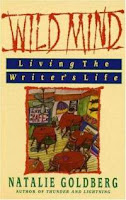
I picked up Wild Mind: Living the Writer's Life by Natalie Goldberg sometime in high school. I bought it, thinking I would finally learn that elusive secret of writing. Instead, it contained things I didn't expect about writing. It wasn't a writing book at all, the author was just talking simply about her life and experiences. I first learned the concept of Zen from this book. The 'rules' in the book were really simple and I found it easy to follow. The book said: "These rules are the bottom line, the beginning of all writing, the foundation of learning to trust your own mind. Trusting your own mind is essential for writing. Words come out of the mind."

The Rules:
1. Keep your hand moving.
2. Lose control.
3. Be specific.
4. Don't think.
5. Don't worry about punctuation, spelling, grammar.
6. You are free to write the worst junk in the universe, galaxy, world, hemisphere, Sahara desert.
7. Go for the jugular. (Something scary comes up? Don't stop, that's where the energy is.)

I think I breathed with relief during that chapter. Until then, what I knew about writing was from English classes. We studied grammar rules, elements of literature, and diagramming sentences. For the life of me, I can never understand why we need to diagram sentences. I always thought it was silly. I would have found writing more interesting then if they taught it like this. It was simple freewriting as a start.

The first activity she suggested was to simply write for 10 minutes without stopping, starting on "I remember". Just write and keep your hand moving. The book says we each have the 'creator' who writes, and an 'editor' or the inner critic. The goal is to stop that inner critic from interfering with the creator, and tap the unlimited creative potential of our minds and unconscious.

The #4 rule is, Don't think. Goldberg calls her process writing practice, and not journaling. This rule is important because as she says: "We usually live in the realm of second or third thoughts, thoughts on thoughts, rather than the realm of first thoughts, the real way we flash on something. Stay with the first flash. Writing practice will help you contact first thoughts. Just practice and forget everything else."

This book taught me that I don't have to always be a good writer with perfect prose, but allow myself to be illogical, to be boring, to write what I want and what I really feel, to write complete nonsense replete with errors or expletives. I don't have to care, as I'm writing for myself and not for anyone else, not for a teacher I have to please for a high grade. I don't have to measure margins, to crumple paper when my handwriting goes bad or the erasures are too much.

What freedom!

And since then, I've probably written thousands of words. I have a lot of words to write still. I'm no longer scared of writing. It had no magical secret or anything. I just keep my hand writing.
- - - - -
One last quote from Wild Mind:
"So finally a writer must be willing to sit at the bottom of the pit, commit herself to stay there, and let all the wild animals approach, even call them up, then face them, write them down, and not run away."

Wednesday, April 25, 2012

I used to be an expert in sweating the small stuff.


I read this in Don't Sweat the Small Stuff for Teens by Richard Carlson and thought, “Wait. Story of my life.”

I received a great letter from a teen who told me that, in the past, she had created a life in her head that included no friends. She'd convinced herself that no one could like her, and that everyone was angry with her. After hearing about the importance of recognizing her own thinking, she woke up to the fact that she was simply carrying on in her mind – it was just her thinking.

She said that she still has occasional insecure thoughts about what others are going to think of her, but she has learned to take them less seriously. As she recognizes her thinking, the sting of pain leaves her.

Before, I thought I'd never be alright the way I am now. It turns out I just created a negative image of myself. Now that I'm 19, I feel like I didn't live the best of my teen years. Its only now I've realized that the best way to get rid of unpleasant feelings and insecurity is to think and do more for others. Forget myself, then I'll forget my problems (most are imaginary, anyway).  


Sunday, February 26, 2012

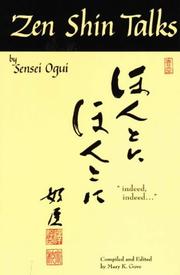
Zen Shin Talks notes

Here are some quotes and notes from a book on Zen. Its not at all 'deep'. When I say Zen some may think of monks meditating, chanting, esoteric teachings of the Truth, but its not just that at all. Fore me, its more on practical advice on living and how to keep a calm state of mind. I like it when a book sounds warm and friendly, that when you read its like having a cup of tea with the writer.
------------
The Golden Gate bridge is beautiful to the passersby, but is a symbol of despair for a mother whose child killed himself there. Though, the bridge is as is.

Whatever happens happens, but see your daily activities as important. See it, face it, overcome it, then learn.

The worst enemy in our life is to believe "I'm absolutely right" when we are wrong. We like things that agree with our notion of what is good and right. We are a victim of notions. We think we understand when we don't.  When you think you are right, correct it by letting others.

Our ego cheers us up when it impresses others.

On one side of a fan it was written, "If I don't do it, who will?" and the other has "The world would not change if you did not exist." When you fan yourself, both sides produce the cool wind.

We have wants and attachments. Wanting to be pretty or smart, attachments to people and ideas. Our ego traps us.

Empty yourself to see things as they are. See beyond identities and classifications.

A flower does not think of competing to the flower next to it. It just blooms.

We all look for some kind of miracle, for a Savior to come from some place to save us. But I say, this is enough. This is miracle enough. I am here. You are here. Your heart is beating. Isn't that amazing?

Talking, planning, thinking, and knowing are different from doing.

...being a conclusion seeker is a modern sickness. Some teenagers actually kill themselves because they arrived at a conclusion about their lives.

Because of people's preconceived ideas and their strong feelings, they hardly hear me. So make yourself empty, then you can truly learn.

A stupid person never realizes how stupid he is, a  person who thinks he is wise is dangerous. Maturity means learning to be careful with your stupidities and to watch out for yourself and others.

The more we have distance between ourselves and situations, we think of them as problems.

Words, ideas, and information burden our minds. So much of our education and fast-paced technology creates pressure.

I thought I was supposed to visit the AIDS patients to comfort them, but its me who gets comforted by them. They don't worry about after life or before life and so on. They are perfectly in their life, right then. They don't even need a name. We need a name, a life of compassion, the powers of God or Buddha or so on. But they don't think they need any of these.

If there is no concept of happiness or unhappiness, we'll never be unhappy. There is an expectation that we should be happy-- but this creates frustration, especially if things don't go as you wish.

I want to live my life totally. I know my life will never occur again, in the same condition as right now. So I will do the best I can without comparison to others.

We are living in the process of becoming. That's why I said that I might explain it better tomorrow. But i won't be here tomorrow.

Saturday, January 14, 2012

Some Zen koans


A koan is a kind of parable, anecdote, riddle or puzzle that doesn't need to be solved. It must be pondered on and applied to your life. 
(from Zen Buddhism, 1959)

Two monks, Tanzan and Ekido, were walking down a muddy street in the city. They came on a lovely young girl dressed in fine silks, who was afraid to cross because of all the mud.
      “Come on, girl,” said Tanzan. And he picked her up in his arms and carried her across.
      The two monks did not speak again till nightfall. Then, when they had returned to the monastery, Ekido couldn't keep quiet any longer.
     “Monks shouldn't go near girls,” he said – “certainly not beautiful ones like that one!”
     “My dear fellow,” said Tanzan, “I put that girl down, way back in the city. It is you who are still carrying her!”
- - -
A student came before the master Bankei and asked to be helped in getting rid of his bad temper.
“Show me this temper,” said Bankei. “It sounds very fascinating.”
“I haven't got it right now, so I can't show it to you,” said the student.
“Well then,” said Bankei, “bring it to me when you have it.”
“But I can't bring it just when I happen to have it,” protested the student. “I'd surely lose it again before it got to you.”
“In such a case,” said Bankei, “it seems to me that this temper is not part of your true nature. If it is not part of you, it must comes from the outside. I suggest that whenever it gets into you, you beat yourself with a stick until the temper can't stand it and runs away.”
- - -
Bodhidharma left his robe and bowl to his chosen successor; and each patriarch thereafter handed it down to the monk that, in his wisdom, he had chosen as the next successor. Gunin was the first such Zen patriarch. One day he announced that his successor would be the who wrote the best verse expressing the truth of their sect. The learned chief monk Gunin's monastery thereupon took brush and ink, and wrote in elegant characters:
The body is a Bodhi-tree*
The soul a shining mirror:
Polish it with study
Or dust will dull the image.
No other monk dared to compete with the chief monk. But at twilight Yeno, a lowly disciple who had been working in the kitchen, passed through the hadd where the poem was hanging. Having read it, he picked up a brush that was lying nearby, and below the other poem he wrote in his crude hand:
Bodhi is not a tree;
There is no shining mirror.
Since all begins with Nothing
Where can dust collect?
Later that night Gunin, the fifth patriarch, called Yeno to his room. “I have read your poem,” said he, “and have chosen you as my successor. Here: take my robe and my bowl. But our chief monk and the others will be jealous of you and may do you harm. Therefore I want you to leave the monastery tonight, while the others sleep.”
      In the morning the chief monk learned the news, and immediately rushed out, following the path Yeno had taken. At midday he overtook him, and without a word tried to pull the robe and bowl out of Yeno's hands.
     Yeno put down the robe and the bowl on a rock by the path. “These are only things which are symbols. If you want the things so much, please take them.”
     The monk eagerly reached down and seized the objects. But he could not budge them. They had become heavy as a mountain.
     “Forgive me,” he said at last, “I really want the teaching, not the things. Will you teach me?”
      Yeno replied, “Stop thinking this is mine and stop thinking this is not mine. Then tell me, where are you? Tell me also: what did your face look like, before you were born?”

(*Bodhi means enlightenment. Though for me, both poems are true.)

Tuesday, January 3, 2012

How 2011 was

2010 was bad, as I was still trying to adjust back to school and was always thinking, "People are so strange!" when all along, I was the strange one. This is how things get when you have your own world like me.

In 2011, I got to know more people and had good friends. I'm still not used to it-- but when did I? It will take centuries before I feel fully at home here on Earth.
  • Ayokong mag-post ng "Before and After" picture pero infernez, pumayat ako nung 2011.
  • I kinds of dislike the phrase "books that changed my life" as I learn a bit of something new in all books I read even the bad ones, but if there is such list Zen Mind: Beginner's Mind by Shunryu Suzuki would top it. If I haven't read it, I'd still be the same egotistic blowhard I was in high school to 2010. I tried to fulfill empty goals like "If only I get higher grades...". The book taught me that the best way to do something is to just do it without any selfish gaining ideas and how important it is to have a beginner's mind. 
  • Sadness is the same as happiness and the goal of meditation is not to feel both, but not in a bad way. An empty mind is ready for anything. Ignore both insult and praise. Learn to believe in Nothing. My favorite line is: "If a god comes, you will welcome him. If the devil comes, you will welcome him."
  • Okay. I'm a shiny happy person now.
 from ndoherty again