Showing posts with label book reviews. Show all posts

Monday, January 6, 2014

Great Reads Quarterly, Oct.-Dec. 2013 (4/4)

This is the last of these quarterly round-ups of book reactions, since I think its a mess and talking about individual books for each post is easier. (Part 1, Part 2, and Part 3 of Great Reads Quarterly 2013).

We Have Always Lived in the Castle by Shirley Jackson
“My name is Mary Katherine Blackwood. I am eighteen years old, and I live with my sister Constance. I have often thought that with any luck at all, I could have been born a werewolf, because the two middle fingers on both my hands are the same length, but I have had to be content with what I had. I dislike washing myself, and dogs, and noise. I like my sister Constance, and Richard Plantagenet, and Amanita phalloides, the death-cup mushroom. Everyone else in our family is dead.” 

So begins the book, told from the deceptive innocent voice of Merricat. We learn about her life, living in the isolated Blackwood mansion with her sister Constance and Uncle Julian. Merricat is the only one  who ventures out her home to the village, as the uncle is paralyzed and the sister is hiding from the village's hate - she's the suspected murderess of her own family. The murder of the Blackwood family remains a mystery, and still casts a pall over its remaining members. The uncle is still obsessed with that day, trying to remember all the details to include in a book he is writing about the massacre.

What's fascinating is the narrator's disturbed mind, which written from her perspective sounds reasonable and normal to herself. The girl is clearly insane and unstable, but its written in a charming and sympathetic way. Though a haunting book, the love between the sisters was portrayed well. Especially for Constance, who still sacrifices for her sister despite her sins. Also, the ending is both amazing and despairing at the same time.


Deathless by Catherynne M. Valente
“The man who knelt before her would have sprung from her needles, even down the ghostly flecks of silver in his hair. She had not known before that she wanted all these things, that she preferred dark hair and a slightly cruel expression, that she wishes for tallness, or that a man kneeling might thrill her.”

Oh my god is the only proper articulation of what this book made me feel. Every page just left me breathless with art and wonder, this book made me realize that words arranged in the right way can induce shivers and chill. Deathless is a retelling and deconstruction of a Russian fairy tale, the story of Marya Morevna and Koschei the Deathless re-imagined in the landscape of the time of Stalin. But it does not dwell too much in this reality. This is how fantasy should be, how a reader can be transported by osmosis into another place, familiar yet alien and filled with both beauty and terror. A reminder that if rendered the right way, magic is there and it is real, in the written word.

The tale begins with a young Marya Morevna, and with her we take a tour through the different creatures from Russian folklore. Then, Koschei the Deathless took her as his wife. Koschei is the Czar of Life, and since the world began he had been at war with his brother Viy, the Czar of Death. Marya plays a role in this war and changes from innocent to ruthless, during this war. Who will win, Life, or Death? That is, until Ivan comes, a chance for Marya to regain her lost humanity.

Well, that didn't say anything about the story, right? Here's the review from Publisher's Weekly (I know, I'm lazy):
"Twentieth-century Russian history provides a background for Valente's lush reimagining of folkloric villain Koschei the Deathless and his dalliance with Marya Morevna, a clever but troubled young woman. After Koschei sweeps Marya away from her family's home in St. Petersburg-Petrograd-Leningrad, Baba Yaga assigns her three tasks that will make her worthy of marrying Koschei. As she spends more time in Koschei's Country of Life, Marya starts to become too much like her unearthly lover, until naïve Ivan Nikolayevich helps her regain her humanity. Valente's lush language and imagery add to the magic and fundamentally Russian nature of the story, drawing pointed parallels between the Soviet Union's turmoil and the endless war between Koschei and his brother, Viy."

“Oh, I will be cruel to you, Marya Morevna. It will stop your breath, how cruel I can be. But you understand, don’t you? You are clever enough. I am a demanding creature. I am selfish and cruel and extremely unreasonable. But I am your servant. When you starve I will feed you; when you are sick I will tend you. I crawl at your feet; for before your love, your kisses, I am debased. For you alone I will be weak.” (Koschei to Marya)

“You have already gone into that tent. You have already made off with her. You have already lost her. You could tell your tale differently this time, I suppose. But you won’t. Your name will always be Ivan Nikolayevich. You will always go into that tent. You will see her scar, below her eye, and wonder where she got it. You will always be amazed at how one woman can have so much black hair. You will always fall in love, and it will always be like having your throat cut, just that fast. You will always run away with her. You will always lose her. You will always be a fool. You will always be dead, in a city of ice, snow falling into your ear. You have already done all of this and will do it again.” (The Gamayun to Ivan, about Marya)

Invisible: A Memoir by Hugues de Montalembert
Imagine an artist, whose art relies on his sight - sculpture, painting, and film. Then, robbers attacked his home in New York and blinded him with acid. Invisible is a terse memoir, the artist writing about the experience of being blinded and how he lived afterward. He acknowledges that losing his sight changed his life, and he writes about the despair he felt about it at first. But he learns to live with it, and even had a more adventurous life after blindness. He learned to swallow his pride and accept that he has to be helped, he even began to travel the world. He also learned to appreciate and use his remaining senses. A great book to remind us not to let setbacks let us down.


Sunday, October 20, 2013

Great Reads Quartlerly, Jul.-Sept. 2013 (3/4)

I have a sort of attention deficit when it comes to reading, I keep on starting to read new books but when I get bored I'll begin another, which leaves me with a lot of unfinished ones. Anyway, here are a few that I did finish last three months. (Part 1 and Part 2 of these book reactions)

in cold blood, truman capote, book reviews, perry smith, richard hickock, murder, true crime, crime, family massacre, murder in fiction, murder mystery, thriller, dick hicock, holcomb, kansas, massacre, capote, book reactions, art, portrait, sideview, criminal pictures, real life killers, 1959, capital punishment, death penalty, punishment, trial, imprisonment
Mock book cover art of Richard Hickock and Perry Smith
by chrispypaints
In Cold Blood by Truman Capote
For me, the most heart-wrenching books are good and well-written retellings of true-to-life crime. My favorite book of all time which I haven't talked about is No Reason for Murder or Heavenly Blue by Ayako Sono, about a serial killer in Japan in the 1980's and a woman who was his only friend. I mean to write a long review on it, but as usual I can't articulate how much it has affected me. I'll reread it again soon, then maybe I can write about it properly. These stories are always an emotional overhaul, especially if death penalty is the punishment.

One of the books of this kind is In Cold Blood, a retelling of the Clutter family mass murder in a Kansas small-town in 1959. The book itself has started the "true crime" genre. The family murdered, how it affected the community, and the killers themselves are characterized well. It showed that no matter how gruesome the crime, the persons behind it are human, too. That's what makes it so touching, how that murder affected the town people, and also the friends and families of both the victims and the accused.

The Clutters are rich farmers who were normal and admired. Richard Hickock and Perry Smith are both ex-convicts always ready to steal and kill, and the book showed their complex partnership -- they're friends who also scheme against each other. However, it was also sad to read about their trial, imprisonment, and eventual execution. Also contains excellent, factual and research-based explanations of sociopathic behavior and insanity in regards to crime, but it mostly speculates on the scientific and legal debates on the issue.

It is interesting that the author himself witnessed the unfolding of the actual investigations even before the criminals were known, and also got to be close with them himself. The way it was written can make a reader experience it first-hand. This book was a bestseller and made Truman Capote famous. It had its share of criticisms for a book this popular, like he was accused of exploiting the events and criminals for money. Capote claimed the book was factual, which only invited critics to nitpick and point out inconsistencies with actual events. But for me a blow-by-blow retelling is impossible, and as they say, "Any story told twice is fiction." There may be factual errors, but the emotions felt and consequences learned are real.

Lord Foul's Bane by Stephen R. Donaldson
The first of a very popular ten-book fantasy series, The Chronicles of Thomas Covenant the Unbeliever. Like stumbling into Wonderland, Narnia, or Oz, the leper Thomas suddenly woke up in a world called The Land after a car collision. Lord Foul, the entity who is the antagonist, assigns him a mission to bring a message to the Land's lords that he has come to destroy their world. The main character isn't what one can call likable at all. His leprosy and state of mind caused by his disease has made him cynical and hateful -- left by his family and scorned by the world. His personality and thoughts contrast sharply with the grandeur of the Land. Of course, at first he doubts all the magic in the place and suspects it's all a dream. Of course you would think it is a dream or you're going crazy, when they say that you're their destined 'savior' and a reincarnation of a war hero from a bygone age.

Most reviews I read hate the book -- too much corny fantasy tropes and an unlikable main character. But, Covenant's hate is depicted well, enough for me to want to read the rest of the books to see how his story will go.

paisley girl, fran gordon, book reviews, naked girl book covers, postmodern literature, poetry, poetic fiction, poetic novels, disease, skin cancer, mast cell leukemia, Paisley Girl by Fran Gordon
The story is told by an unnamed narrator who has a strange skin cancer that draws paisley patterns all over her skin. The narrative is alternating between bland details of daily life confined in a hospital, and flashbacks of a more exciting life before the disease. And after, when she travels away from home and got involved in drug trafficking. This is the kind of book to be enjoyed for the language, though nothing much happens except the girl's travels, thoughts, family, etc. But I still underlined a lot of clever turns of phrase and poetic lines. The girl seems to wander and wake up in strange men's beds without explanation, though.
"In crossing boundaries there's always change; it's always irreversible. In crossing boundaries, you -- as you know yourself -- die. I suppose that's why people don't want to go there."

Wednesday, August 14, 2013

Great Reads Quarterly, April-June 2013 (2/4)

From now on, every post about books will have a picture of Kakashi reading.
Lots of things to do, Midterms is over, and we're in the middle of gathering the answered questionnaires for our Research and it involves me and my thesis partner running around the libraries in the city. Then, all the writing left until the semester ends by second week of October. My room is repainted aquamarine, a shade of sea-green. I have a new closet and a narrow floor-to-ceiling bookshelf, painted light pink. The ceiling is white. I could stay here for hours. (I am).

Continuing Great Reads Quarterly '13...

These book reactions were supposed to be posted last month... Right now I'm reading more short stories (that can be finished in a sitting) than novels. From April to June, I've been reading so few books.

Caedmon's Song by Peter Robinson (1990)
It was going to be a long haul, this recovery, Kirsten thought with a sudden chill of fear. It wasn't going to be easy at all.

In the topic of serial killers, it seems that more is said about the psychology and life of the killer than his victims. Killers fascinate and scare us, but most of the time their victims are just statistics.

What if a victim survives a vicious and brutal attack? I never thought about that myself until I read Caedmon's Song. Kirsten, a graduating university student, celebrates her last days in university with her friends by partying. However, she wakes up days later in a hospital, her body barely held together by stitches and having no memory of what happened. Due to damage from stabbings, her womb was removed. Life changed, but the killer is still out there. She decides to hunt him down herself and kill him, not only for revenge for herself but also for the other victims already dead, and to prevent him from killing more. She wasn't satisfied with the police investigations, and took it upon herself to deliver justice.

The book focuses more on Kirsten, the serial killer doesn't show up until the last few chapters. What's striking is how people treated her after the attack, saying that "she almost got herself killed" as if it was her fault, not the killer's. Instead of sympathy, she just got more hostility. The downward spiral that started from the attack was also depicted well, and her alienation from friends and family. In the end, it was a triumph for her. It's a good story about revenge. (Yeah, my words don't do it justice.)

No matter how bleak some of the possibilities seemed, she felt free at last. Even imprisonment would be a kind of freedom now. It didn't really matter what happened because she had done what had to be done. Now she was free.

The works of Catherynne M. Valente
I haven't finished reading her novels Deathless and Palimpsest yet, I go slow, the words better savored that way. Valente's use of language, her twisting words into iridescent images and spell-binding poetry, is overwhelming. Reading her written words illicit a physical reaction in me: I feel cold, I feel the little hairs on my nape tingle, I feel mild shocks through my spine. I'm not exaggerating. Mere words can make me feel that, and I read her sentences over and over to feel them again. Its almost like a drug. Very few writers make me feel that. I only ever finished her short stories online. I recommend "How to become a Mars Overlord", "The Harpooner at the Bottom of the World", "The Wolves of Brooklyn", and "Secretario". Valente is known for re-envisioning legends, folklore, mythologies, histories both real and imagined, blending science fiction and fantasy. Her voice is unique.

I would sacrifice a hand to write like that. Or my liver, because if its my hand then I can't type.

The Hundred Thousand Kingdoms by N.K. Jemisin was very good and complex, and at the moment I can't form an adequate summary or review, and the book is the first of a trilogy. I'm halfway through Book 3. I'll probably write a post after I finish it.

Monday, April 8, 2013

Great Reads Quarterly, Jan.-Mar. 2013 (1/4)

Expect 4 of these reviews for 2013 (First this April, then July, October, and January '14). I will start this to encourage myself to read and to post here more. I will not include all the books I read, just a few I like. Again, these are more of reactions than reviews. I'll try to keep it spoiler-free.

Before Ever After by Samantha Sotto
Shelley's husband Max dies, and after three years a stranger knocks on her door who resembles Max and claiming to be her husband's grandson. He tells Shelley her husband is alive and well, and they travel from Madrid to Boracay to find the answers to Max's mystery. The story occurs in flashbacks: from the time Shelley met her husband, a tour guide for a European tour; to the stories Max tells about the history of the many countries they visit.

The love story felt cheesy and rushed but I liked the details of travel across Europe and the bits of historical tales Max narrates. It was overall okay. Max is some sort of immortal who has lived many lifetimes. Shelley must make a choice between death and 'ever after'. But it ended in a very ominous way that was more horror than romance for me. I wonder if it was foreshadowing for a sequel...anyway the writing style is good and its a cheaper tour to Europe and through time while not leaving your seat.

This book was widely talked about in its release as its written by a Filipina author signed by a big, international publisher (Random House).

Blood Oranges by Kathleen Tierney (a.k.a. Caitlin R. Kiernan)
Funniest book I've read in a long time. Siobhan Quinn is a monster hunter, but none of your romantic notions or expectations. She's long been fighting the 'nasties' but one unlucky night changes her life: she's bitten by a vampire and a werewolf. The hunter becomes the monster. Werepire? Vampwolf? Her drug addiction is replaced by a new craving for blood. She was 'changed' to be a weapon for some vampire's revenge plot. What I like is the book's take on the Supernatural underworld (there's even a demon brothel and trolls under bridges) and when Siobhan wakes up naked after turning to a werewolf and eating someone. I also like the monsters here, they are actually monstrous. As Siobhan says: “And take it from me, vampires sure as hell don’t sparkle… or glitter… or twinkle, no matter what that silly Mormon twit may have written, no matter how many books she’s sold, and no matter how many celibate high school girls have signed themselves up for Team Edward.”
In my mental cast of characters, Quinn is played by ex-Sugababe Siobhan Donaghy and Mr. B (another guy from the trade who helps her) looks like Leonardo DiCaprio in Django Unchained.

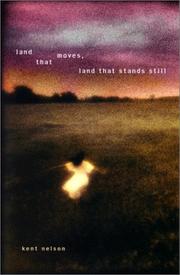
Land that moves, Land that stands still by Kent Nelson
Most of the story occurs in a big farm and the daily maintenance of land is detailed, and I thought it would be boring at first but it's not. Mattie recently lost her husband to an accident, and her daughter Shelley comes back. They are joined by Dawn, a weird mechanic who has changed her name many times; and a runaway Indian boy. They encounter annoying relatives, douchebag neighbors, violent ex-boyfriends, and other problems. I like the theme of random strangers who end up like family (oh, I liked that too in Samurai X).

Non-Fiction:
Dojo Wisdom for Writers by Jennifer Lawler
A book of 100 short inspirational essays that applies a Martial Arts perspective on writing. It made me want to take up Martial Arts, and its another book to read when one feels down because reading a few essays gives me motivation to persevere and be positive. It can also be applied in areas other than writing.

The Drama of the Gifted Child by Alice Miller
It's a short book on family psychology but there are some parts I can't follow because I'm not familiar with psychoanalysis. It is full of insights on children not having 'real selves' anymore due to parents' expectations of achievement, and this manifests as depression in adulthood. This particular paragraph hit me:
"...all the love he has captured with so much effort and self-denial was not meant for him as he really was, that the admiration for his beauty and achievements was aimed at this beauty and these achievements, and not at the child himself. In analysis, the child that is hidden behind his achievements wakes up and asks: "What would have happened if I had appeared before you, bad, ugly, angry, jealous, lazy, dirty, smelly? Where would your love have been then? And I was all these things as well. Does this mean that it was not really me whom you loved, but only what I pretended to be? The well-behaved, reliable, empathic, understanding, and convenient child..."

Sunday, December 30, 2012

Great Reads this 2012


I'm not used to talking about books, really. Especially when they move me. I think my reviews or explanations are inadequate. My summaries are so clumsy compared to the elegant prose and plot of the actual text. I'm not good in recommending, since my taste often makes others roll their eyes. I'd like to shove books I think are awesome to others, but for now I'll content myself with just writing about them on the internet.

Alabaster: Wolves [comic] by Caitlín R. Kiernan (2012)
dancy flammarion, caitlin kiernan, comics, new, contemporary, dark, supernatural
I mostly read manga and not American comics, but I follow Kiernan's work and the first cover was great so I read it. Dancy Flammarion is a wandering monster-hunter, who may only be delusional, and fighting for (?) God. In this story, she's in an abandoned city overrun by werewolves. Her guiding angel leaves, and Dancy must rely on her wits and resources to fight creatures she encounters. She has always been travelling alone, but now has two unlikely travel companions: a talkative bird, and a ghost of a werewolf. As a review says:"Dancy’s not pretty. She’s not sweet. She’s wary and weary, determined and damaged; and she’s spent long enough fighting her way through darkness and weirdness that they’ve begun to cling around her like a lingering stench. She stares out from Greg Ruth’s covers, equal parts haunting and haunted."
werewolf, dancy flammarion, supernatural, comic strip, sample

The Drowning Girl: A Memoir by Caitlín R. Kiernan (2012)
This book has been described as "half mad artist's diary, half fairy tale". Imp is schizophrenic, and obsessed about paintings. Her memories are confusing to her, and tries to write a memoir to make sense of inexplicable events regarding a mysterious woman named Eva Canning.

Sphere by Michael Crichton (1987)
There's a spaceship. In the bottom of the Pacific Ocean. Experts from different fields are brought down to investigate: a psychologist, mathematician, biologists, etc. They find a Sphere. Where, when, why, how, what, all these to answer. Some mysteries are best left as mystery. (I can't articulate how cool it is.)

The Passage by Justin Cronin (2010)
This is a different kind of post-apocalyptic vampire story. A research called Project NOAH wanted to find a cure for aging, but things go wrong and a virus turning people into "virals" spreads across America. Chaos ensues to the point where even government can't solve. Decades into the future, humans carve their own isolated communities. A girl from Project NOAH survives for a century without growing old, the research's sole successful experiment. She may hold the answer on how to save the world from the virals. This book has a lot of compelling characters, and impossible to put down once started. Highly recommended.

Song of Kali by Dan Simmons (1985)
Re-reading books gives one more perspective about the story than the first read. During first readings, I tend to go fast because of the suspense, and wanting to know what will happen next. In reading again, I focus on how the story is told, how the author achieved this effect, and I always discover something I haven't noticed before. This book gave me chills in first reading. I liked it even more the second time, and I'm looking forward to more readings. I bought it because I like Kali the goddess, the Hindu pantheon is much more interesting for me than Greek gods.

An American writer is given an assignment to Calcutta, India, to interview an Indian poet rumored to be dead years ago. Calcutta fascinates and intimidates him. The assignment doesn't seem simple anymore when said poet is rumored to be resurrected by the powers of the goddess Kali, involving complex rituals of human sacrifice by the  Kalipalika cult. This is labelled to be horror but it can be a tear-jerker, and even if how morbid it is, its also a funny book. I especially like the character Krishna (well, that will be for another post).

Here is the often-quoted introduction of the book (while searching, I found a complete copy online. Go read!):
Some places are too evil to be allowed to exist. Some cities are too wicked to be suffered. Calcutta is such a place. Before Calcutta I would have laughed at such an idea. Before Calcutta I did not believe in evil — certainly not as a force separate from the actions of men. Before Calcutta I was a fool.
          After the Romans had conquered the city of Carthage, they killed the men, sold the women and children into slavery, pulled down the great buildings, broke up the stones, burned the rubble, and salted the earth so that nothing would ever grow there again. That is not enough for Calcutta. Calcutta should be expunged.
         Before Calcutta I took part in marches against nuclear weapons. Now I dream of nuclear mushroom clouds rising above a city. I see buildings melting into lakes of glass. I see paved streets flowing like rivers of lava and real rivers boiling away in great gouts of steam. I see human figures dancing like burning insects, like obscene praying mantises sputtering and bursting against a fiery red background of total destruction.
     The city is Calcutta. The dreams are not unpleasant.
     Some places are too evil to be allowed to exist.

Tuesday, May 22, 2012

ILLUSIONS: The Adventures of a Reluctant Messiah [review]

“What if somebody came along who was really good at this, who could teach me how the world works? If a Buddha or Jesus came to our time and landed in the same meadow with me, what would he say, what would he be like?” asks Richard Bach in his foreword to Illusions. Here he meets the mysterious ex-Savior Donald Shimoda, now flying around passengers on his biplane for a living, same job as his.

Ex-Messiah. Donald just decided to quit. He didn't like the crowds starting to praise him. He still can do miracles, though. His shadow passes over dead bugs and they fly away alive. He can walk on water, swim on soil, walk through walls. He can see the future but tries not to think of it. He's lived in many lifetimes here, in other worlds, and in different dimensions. He's been a wanderer lately.

“Stay in one place too long and people knew I was something strange. Brush against my sleeve, you're healed of terminal cancer, and before the week's over the crowd's there again. This airplane keeps me moving, and nobody knows where I came from or where I'm going next, which suits me pretty well.” He once walked off a crowd to the sea, and then disappeared.

He teases Richard with magic tricks at first. Richard wonders if Masters receive formal training or practice. Donald hands him the Messiah's Handbook & Reminders for the Advanced Soul, filled with epigrams.

Learning is finding out what you already know. Doing is demonstrating that you know it. Teaching is reminding others that they know just as well as you. You are all learners, doers, teachers. Your only obligation in any lifetime is to be true to yourself.  Being true to anyone or anything else is not only impossible, but the mark of the fake messiah.

Richard doesn't pray to him, they're just friends. Don quit because people only came to him for the miracles and not for his message. Don teaches him about life in unconventional means, even walks on the lake with him. He tells Richard that all of us are unrealized messiahs.

In the end, Don dies. He doesn’t come back from the dead, though visits Richard for the last time through a dream. Life isn't the same. The last page of the Messiah's handbook says: Everything in this book might be wrong.
 - - - - - 
The whole book's message can be summed up by this short parable in the foreword:
Once there lived a village of creatures along the bottom of a great crystal river. The current of the river swept silently over them all--young and old, rich and poor, good and evil, the current going its own way, knowing only its own crystal self.

Each creature in its own manner clung tightly to the twigs and rocks of the river bottom, for clinging was their way of life, and resisting the current what each had learned from birth. But one creature said at last, "I am tired of clinging. Though I cannot see it with my eyes, I trust that the current knows where it is going. I shall let go, and let it take me where it will. Clinging, I shall die of boredom."

The other creatures laughed and said, "Fool! Let go, and that current you worship will throw you tumbled and smashed across the rocks and you will die quicker than boredom!" But the one heeded them not, and taking a breath did let go, and at once was tumbled and smashed by the current across the rocks.

Yet in time, as the creature refused to cling again, the current lifted him free from the bottom, and he was bruised and hurt no more. And the creatures downstream, to whom he was a stranger, cried, "See a miracle! A creature like ourselves, yet he flies! See the Messiah, come to save us all!"

And the one carried in the current said, "I am no more Messiah than you. The river delights to lift us free, if only we dare let go. Our true work is this voyage, this adventure." But they cried the more, "Savior!" all the while clinging to the rocks, and when they looked again he was gone, and they were left alone making legends of a Savior.
(
© Richard Bach)

Friday, February 18, 2011

PROM NIGHT: Strange Tales of that once-in-a-lifetime Night [review]


The invitation, the clothes, the theme, the night you'll always remember- or wish you could forget! opens Prom Night, a collection of short stories ranging from funny, strange, magical, and bittersweet, on that most-awaited event in high school. Almost anything you can imagine is here: zombies, vampires, elves, fairies, Greek mythology, unrequited love, UFOs, aliens, sex, and time travel. There's sure to be at least one story you'll enjoy.

In fairy stories the spell runs out at 12, but our characters always forget that. In 'Happily Ever After' a fairy godmother helps an awkward boy to the prom, but shows that love and happy endings don't need magic. 'Märchen to a Different Beat', has Hansel and Gretel, now older. A fairy godfather slash drag queen helps a gay Hansel get a date. It ends with a dance- Hansel and Jack from the Beanstalk.

'Omar's One True Love', his dreamgirl kills herself, but he must have her as a date. The solution- bring her back to life, but she wants to stay dead. Omar's condition: she can die again after the prom. It gets funny on the night he brings a zombie. In 'Bitterfly' a boy gets accused of killing his boyfriend due to drug-induced hallucinations, with a winged girl who may not be real.

'The Ancient Order of Charming Princes' tells what happens to Princes Charming after happily ever after. They're for hire as prom dates. As they reminisce about their pasts slaying monsters and saving princesses...
“Who would have thought we are now reduced to an escort service? Like a bunch of hookers in shining armor.”
“Gyrating and thrusting, that's what kids call dancing nowadays. Last time I saw anyone move like that was when you got ants in your codpiece.”
“My butt hasn't been this firm since the Renaissance.”

'Borrowed Lives' is a sad tale on memories from an old picture bought on a thrift store. In 'Music to her Ears', an old woman has a music box that brings her back to 1916. The best story may be 'Memory and Reason', a future where a boy and an alien girl choose to be together despite the odds.

If I were to design the cover, it'll be a rose corsage on a severed hand.